


When Every Second Counts



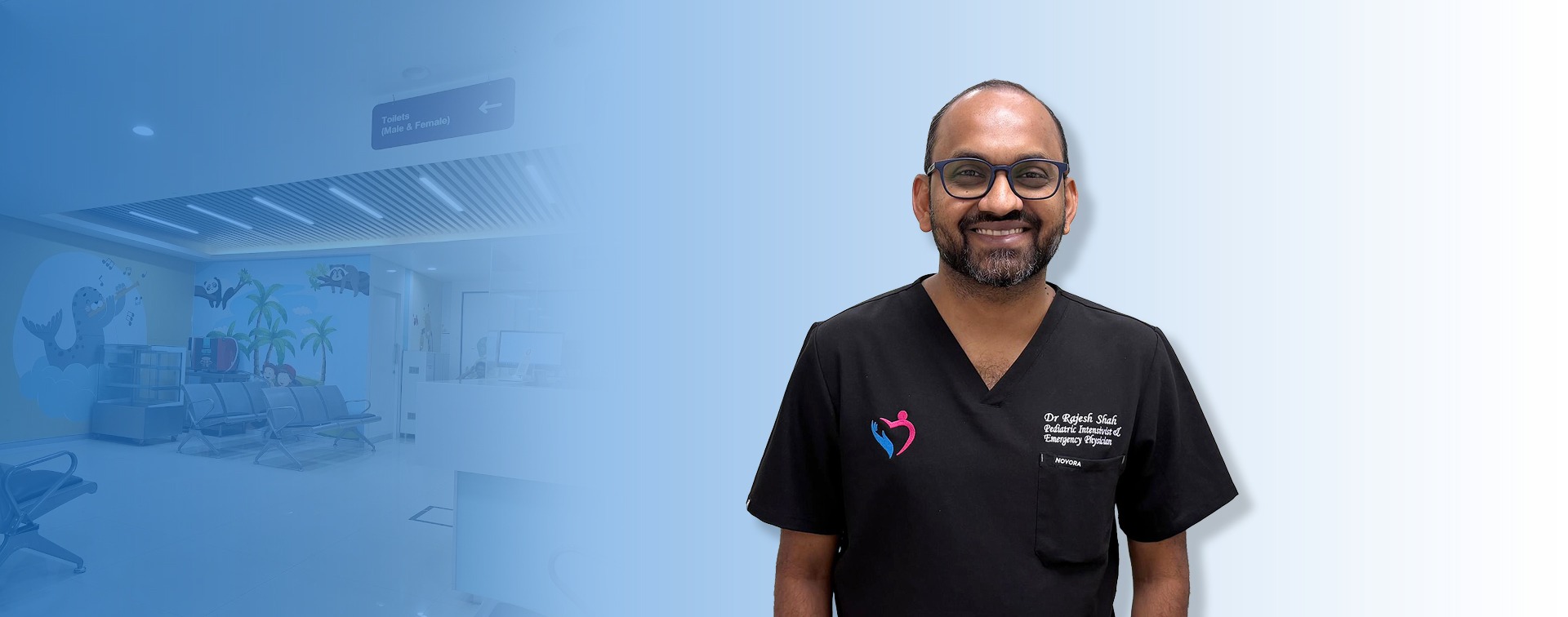
Dr. Rajesh Shah
Dr. Rajesh Shah is a highly qualified and experienced Pediatric Intensivist and Emergency Medicine Specialist at Clinical Lead, Pediatric Critical Care & Emergency | KIMS Cuddles. He is dedicated to providing exceptional care to critically ill and injured children.
Dr. Rajesh Shah has extensive experience in managing critically ill children, including those requiring complex interventions and advanced life support. He is also skilled in providing emergency care for children, ensuring timely and effective treatment for various injuries and illnesses. Dr. Rajesh Shah is proficient in managing pediatric trauma cases, offering his expertise in stabilizing and treating children who have experienced accidents or injuries. He holds over 10 years of experience in managing critical liver transplant cases in children.
Your Right Choice
Our goal is to help our customers be satisfied and solve problems when leaving, we are not seeking profits that we want to share, sympathize, help you solve your worries and troubles. This sleek metallic tower stands out from surrounding buildings, and is set to transform.
We are always ready for every
challenge. Please trust us
Treatment of child with breathing difficulty
Treatment of the child with liver and gastrointestinal disorder
Treatment of a child with a cardiac problem
Treatment of Infectious disorders
Treatment of neurological disorders
Miscellaneous conditions
We are always ready for every
challenge. Please trust us

Treatment of the child with liver and gastrointestinal disorder

Treatment of a child with a cardiac problem

Treatment of Infectious disorders

Treatment of neurological disorders

Miscellaneous conditions
10 + yrs
Experience in pediatric critical care
1500 +
Pediatric Critical Cases Handled
6000 +
Happy Pediatric Patients
Testimonials
I came across Dr Rajesh Shah in the year 2019 when my son under treatment at Global Hospitals, Parel.
My son Nikhil underwent Liver Transplant in July 2020 (14 years old at that time).
Being a Liver Donor myself and Nikhil were in ICCU post operation. Dr.Rajesh and Dr.Mandar were Intestivists in ICCU. After week of transplant Nikhil got convulsions at mid night. It was so serious and critical situation. But both handled the situation so efficiently and saved my son.
Till date I am in touch with, and they come forward to help me.
Thank you.
Mr. MM
Dr Rajesh is an excellent pediatrician, we are always thankful to him for all the great help provided to our child Dhriti who is 6 years old. His expertise of understanding the illness and providing an effective treatment plan has always been helpful.
Shoutout to Dr Rajesh, thanks for timely support and always being available.
Mr. SV
Dr Rajesh Shah is one of the finest pediatrician I have come across for my kid. He answers calls and also replies to messages diligently. All my doubts are cleared and prescribed medicines are only as required and not too many. In emergency we have had Dr visit us as soon as called. I would definitely recommend Dr Rajesh for his knowledge and helping our kids recover from health issues with his right Guidance.
Mr. RT
MRR Children's Hospital is a temple for me and doctor's here are not less than God for us as they have saved my baby's life from a life threatening bacterial infection. I will always be thankful to the doctors for this throughout my life. Dr Rajesh Shah, Kiran More and all other doctors and nurses are reliable. If they can treat meninjitis then they can do anything wonder.. I would highly recommend this hospital to all the parent’s. They have a tagline "where children comes first" and its really true.
Mr. TL
Please note that names and identifying details have been changed/removed to protect patient privacy.
Share your experience with us on Google Review
Popular Question
A regular pediatrician looks after the general health of children - routine check-ups, vaccinations, common illnesses like fever, cold, or ear infections. A Pediatric Intensivist is a doctor who has done additional specialised training specifically to care for critically ill children - children whose lives may be at risk due to severe illness, injury, or organ failure.
Dr. Rajesh Shah is both a Pediatric Intensivist and a Pediatric Emergency Medicine specialist. This means he is trained to handle the most serious, life-threatening situations in children - both in the emergency room and in the Pediatric Intensive Care Unit (PICU).
A Pediatric Emergency Medicine specialist is a doctor trained to assess and treat children who arrive in the emergency department with sudden, serious, or potentially life-threatening conditions -such as breathing difficulty, seizures, trauma, poisoning, or sudden deterioration. Dr. Shah holds a Fellowship in Pediatric Emergency Medicine (FACEE-PEM) from the Academic College of Emergency Experts in India.
Dr. Rajesh Shah is based at KIMS Hospital, Thane West, Maharashtra. He heads the Clinical Lead, Pediatric Critical Care & Emergency | KIMS Cuddles.m
Yes. Dr. Shah is available for second opinions, especially for children with complex, multi-system illnesses or those who are not improving as expected. You can reach him at +91-8879160707 or email shahrajesh2003@gmail.com to discuss your child's situation.
A PICU - Pediatric Intensive Care Unit - is a specialised hospital ward designed exclusively for critically ill children. Unlike a general ICU (meant for adults) or a general ward, a PICU has:
- Equipment specifically sized and calibrated for children
- Doctors and nurses trained in pediatric critical care
- 24/7 monitoring of vital signs, organ function, and brain activity
- The ability to support breathing (ventilators), heart function, and other failing organs
KIMS Hospital has a 10-bed PICU managed by Dr. Rajesh Shah and his team.
Your child may need PICU admission if they have:
- Severe difficulty breathing or need of a breathing machine (ventilator)
- A seizure that won't stop (status epilepticus)
- Septic shock or severe infection with organ involvement
- Serious head injury or polytrauma
- Acute liver failure or post-liver transplant complications
- Cardiac arrest or dangerous heart rhythms
- Poisoning with serious symptoms
- Any condition where vital organs need close monitoring and support
The decision to admit a child to the PICU is always made by the treating doctor based on the child's condition.
At KIMS Hospital, we understand that a hospitalised child needs the comfort of their parents. Visiting policies are explained at the time of admission. In most cases, parents are allowed to visit during designated hours and are regularly updated by Dr. Shah and the nursing team on their child's progress. We believe in keeping families informed and involved.
Dr. Shah and his team make it a priority to communicate with parents clearly and regularly. You will receive updates on your child's condition, the treatment being given, and what to expect next. Medical language will always be explained in simple terms. We encourage parents to ask questions—no question is too small when it concerns your child.
The length of stay depends entirely on the child's condition and how quickly they respond to treatment. Some children may need PICU care for just 24-48 hours, while others with complex conditions may require a longer stay. Dr. Shah will give you a realistic expectation based on your child's specific situation.
Seek emergency care immediately if your child has any of the following:
- Breathing: Very fast or very slow breathing, bluish lips or skin, skin pulling in at the neck or between ribs with each breath, noisy breathing (wheezing, grunting, or a high-pitched crowing sound)
- Consciousness: Unconscious, difficult to wake up, confused, or having a seizure
- Heart: Sudden fainting, chest pain, very rapid or irregular heartbeat, sudden severe paleness
- Infection: High fever with extreme drowsiness, neck stiffness, rash with small red/purple spots that don't fade when pressed
- Abdomen: Vomiting blood, passage of dark/tarry stools, sudden severe abdominal pain
- Injury: Any significant head injury, fall from height, road accident, or suspected poisoning
When in doubt - don't wait. It is always better to be seen and reassured than to delay care in a genuine emergency.
If your child has swallowed a medication (especially in large amounts), a household chemical, a plant, or any unknown substance:
- Do NOT try to make your child vomit unless specifically advised by a doctor
- Bring the container/packet of the substance with you to the hospital
- Note the time it was swallowed and how much
Call 022- 44123456 immediately or go to the nearest emergency room. Dr. Shah has a special clinical interest in pediatric poisoning and follows evidence-based protocols for all types of ingestions.
- Stay calm
- Lay your child on their side (recovery position) on a flat, safe surface
- Do NOT put anything in the child's mouth
- Do NOT restrain the arms and legs forcefully
- Note the time the seizure started
- If the seizure lasts more than 5 minutes, call emergency services immediately or rush to the hospital
- If your child has a known seizure disorder and their doctor has prescribed emergency medication (like diazepam rectal gel or midazolam nasal spray), administer it as instructed
Seek emergency care immediately after a head injury if your child:
- Loses consciousness, even briefly
- Has a seizure after the injury
- Vomits more than once after the injury
- Has a severe or worsening headache
- Becomes increasingly drowsy or is difficult to wake
- Has weakness or numbness in any limb
- Has fluid or blood coming from the ears or nose
- Is under 1 year of age (always get evaluated)
For minor bumps with no loss of consciousness and normal behaviour, you can monitor at home—but always err on the side of caution.
Septic shock is a life-threatening condition where a serious infection spreads into the bloodstream and triggers a severe bodywide reaction. The body's response to the infection begins to damage its own organs. Signs include high fever (or sometimes abnormally low temperature), rapid breathing, low blood pressure, extreme weakness, and altered consciousness.
Yes- septic shock is a medical emergency. However, with early recognition and aggressive treatment in a PICU setting, many children recover fully. Time is absolutely critical: every hour of delay in starting antibiotics and fluid resuscitation worsens outcomes.
ECMO stands for Extracorporeal Membrane Oxygenation. It is an advanced life-support machine that temporarily takes over the work of the heart and/or lungs when they are too sick to function on their own. Blood is pumped out of the body, passed through a machine that adds oxygen and removes carbon dioxide, and returned to the body.
ECMO is used only in the most critically ill children - for example, after cardiac surgery, in severe heart failure, or in severe lung failure not responding to a ventilator. It buys time for the heart and lungs to recover or for a transplant to take place.
Guillain-Barré Syndrome is a condition where the body's immune system mistakenly attacks the nerves, causing progressive weakness that usually starts in the legs and moves upward. In severe cases, it can affect the muscles of breathing, requiring ventilator support in the PICU.
The good news is that with appropriate PICU care, physiotherapy, and treatment (IVIG or plasmapheresis), the majority of children with GBS recover well - though recovery can take weeks to months. Dr. Shah has managed several children with GBS requiring intensive care.
Email: shahrajesh2003@gmail.com
Phone/WhatsApp: +91-8879160707
Address: KIMS Hospital, Thane Hiranandani Estate, Queens St, opposite BRENTFORD, Patlipada, Thane (West), Thane - 400607.
For emergencies, please call directly 022 44123456 or come to the hospital emergency room.
Yes. Dr. Shah sees patients for outpatient consultations. Please call +022 44123456 to schedule an appointment or enquire about OPD timings.
Yes, absolutely. Dr. Shah works closely with pediatricians, general practitioners, and other specialists who wish to refer critically ill children for PICU or emergency management. Referring doctors are welcome to call directly on +91-8879160707 to discuss a case.
Any previous medical records, discharge summaries, or investigation reports
- Current medications your child is taking (or bring the medicine strips/bottles)
- Your child's vaccination record (if available)
- If poisoning is suspected: the container or packet of the substance consumed
- Government-issued Identity card (e.g., Passport, Driver's License, PAN) or any valid ID for registration
If you are coming in an emergency, do not delay coming to get documents together. Your child's safety comes first—paperwork can follow.